BEFORE 1872
Spoken at the booth
Voters gave their name, address and choice aloud to a clerk, in full view of the candidates' agents. Choices could be printed afterwards in unofficial poll books.
Compare the erasA SHORT HISTORY OF THE SECRET BALLOT
Voting in Britain was once a public performance.
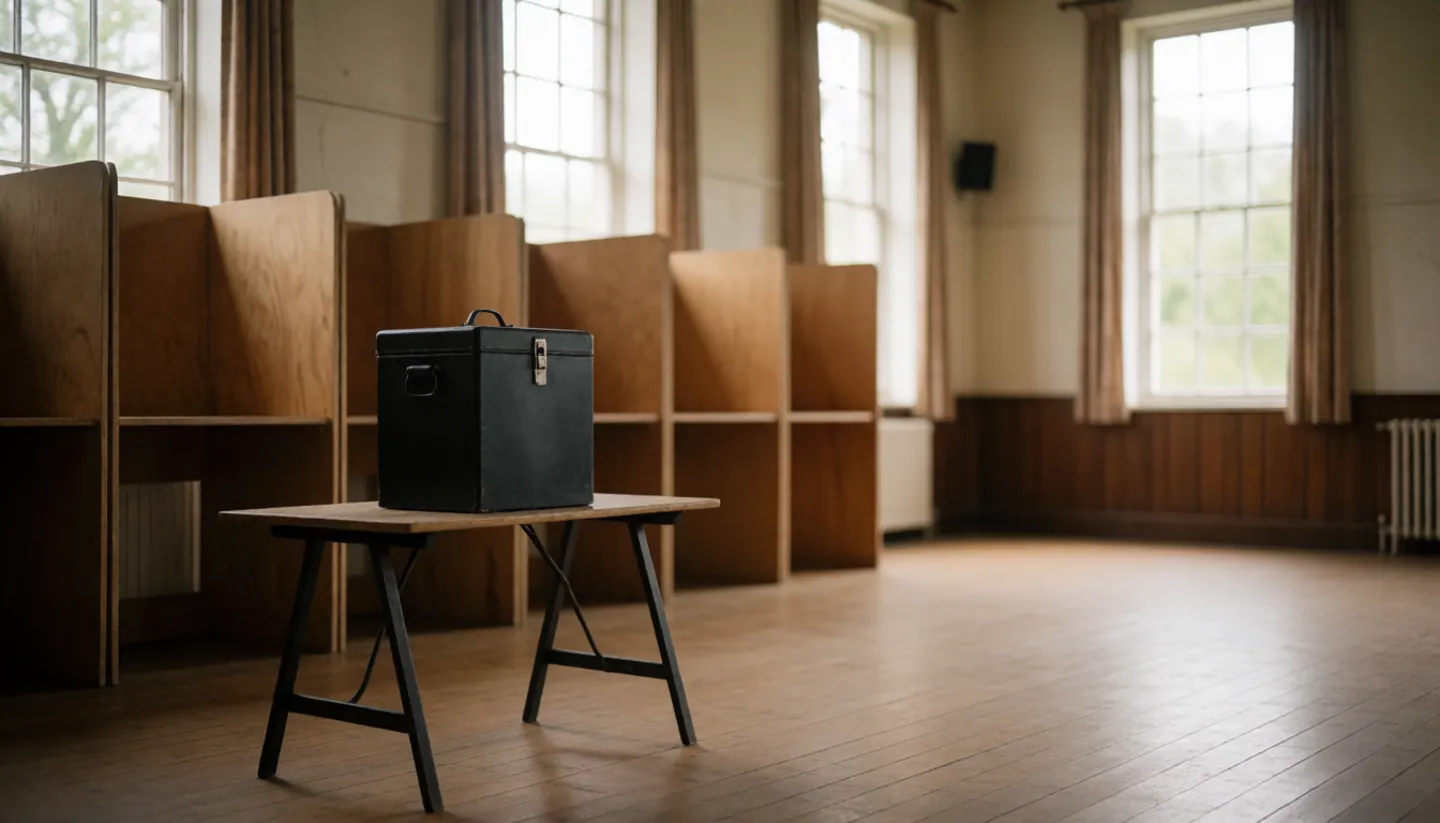
Until 1872, a voter stated his choice out loud in front of candidates' agents and a watching crowd. The Ballot Act replaced that with a paper, a pencil and a private booth, and the law still guards that privacy today. An independent informational guide.
1872 the year voting went private
THE SHORT ANSWER
Three changes made the modern UK vote.
Each one took a little more of it out of public view.
BEFORE 1872
Voters gave their name, address and choice aloud to a clerk, in full view of the candidates' agents. Choices could be printed afterwards in unofficial poll books.
Compare the erasTHE BALLOT ACT
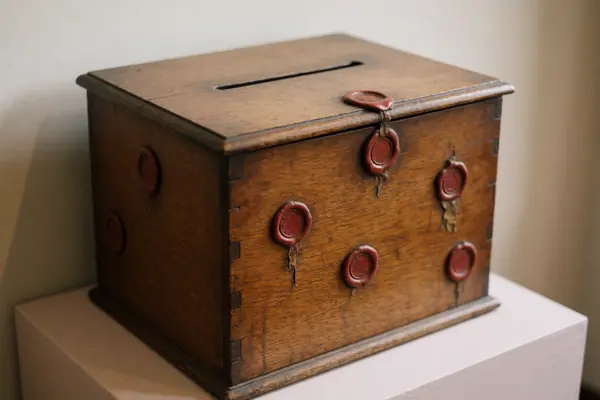
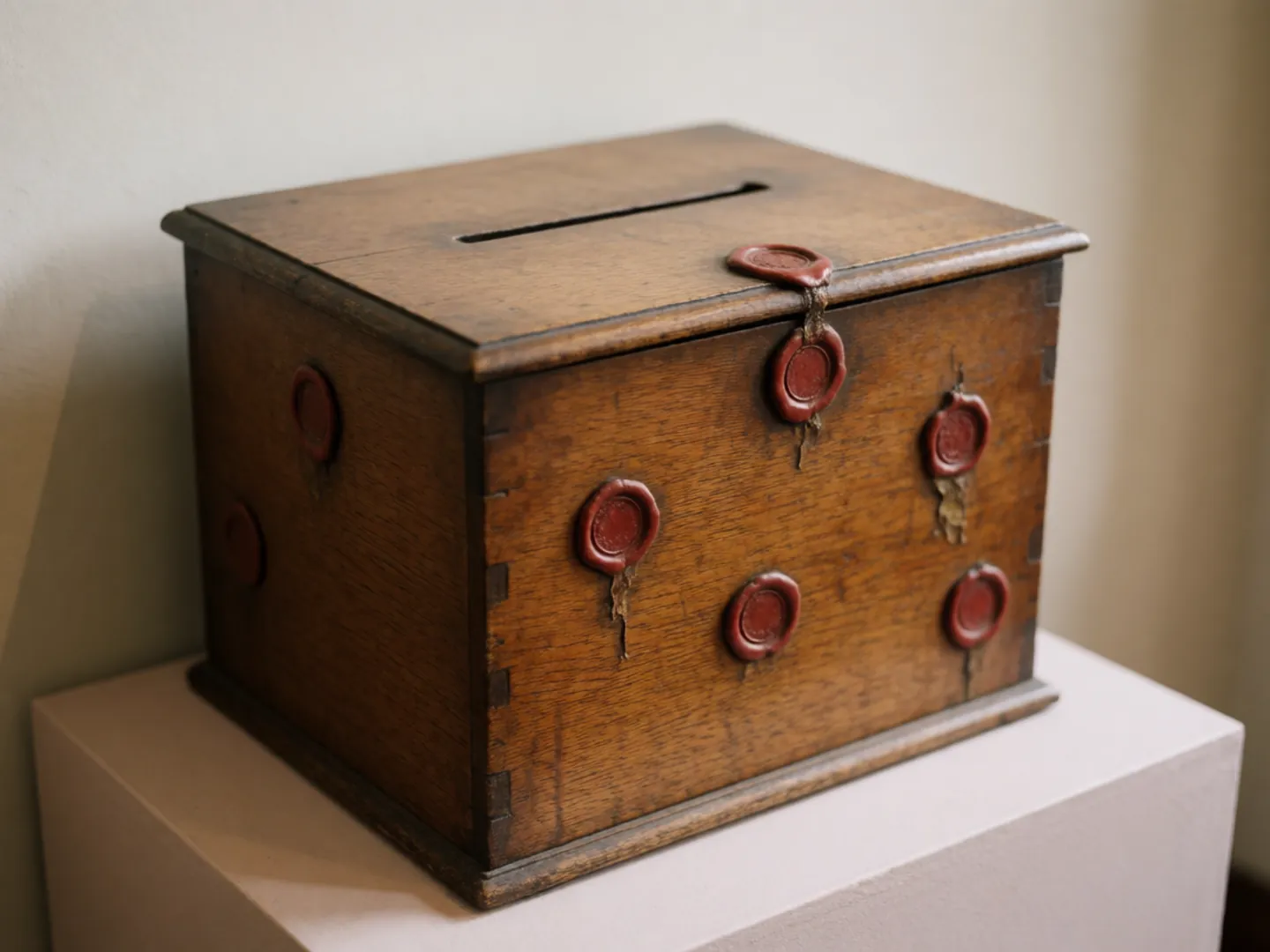
The 1872 Act brought in the ballot paper and the polling station. Voters marked the paper alone, folded it and put it in a sealed box.
See the numbersTODAY
The Representation of the People Act 1983 makes it an offence to interfere with a voter or pass on how someone in a polling station voted.
How it works nowGeneral information only, not legal advice. For advice on your own situation, speak to a qualified lawyer or a free advice service.
FROM HUSTINGS TO BOOTH
Pick a moment in UK voting history. The bar shows how private an individual's choice was at the time.
A historical summary for general interest. It is not voting advice and says nothing about any party or candidate.
TWO NUMBERS WORTH KNOWING
One figure on how long you have to vote,
one on how seriously the law treats secrecy.
15 hours
Polling stations open 7am to 10pm
GOV.UK says polling stations are open from 7am to 10pm on polling day. You can only vote at the polling station on your poll card, but you do not have to take the card with you.
POLLING DAY · GOV.UK
6 months
Maximum prison term for breaching secrecy
Breaking the secrecy rules in section 66 can lead, on summary conviction, to a fine not exceeding level 5 on the standard scale or imprisonment for up to 6 months.
SECRECY · RPA 1983 s66
History Today notes that the first secret-ballot by-election was held at Pontefract in August 1872, and that its ballot boxes were sealed with stamps of liquorice from a local maker of Pontefract cakes.
WHAT HAPPENS AT THE POLLING STATION
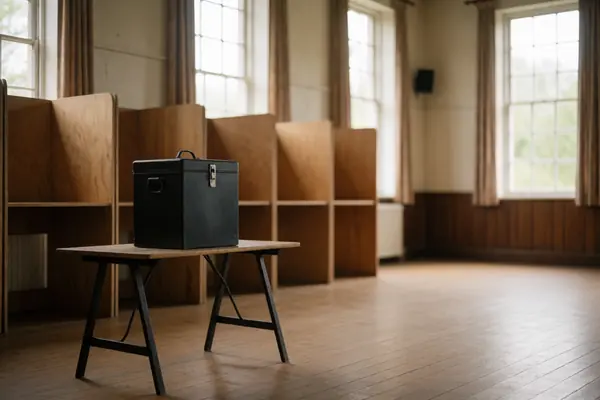
The basic pattern set in 1872 is still recognisable. This is what GOV.UK describes for voting in person in the UK.
Tell the staff inside the polling station who you are. In some elections and referendums you also need to show photo ID.
You are given a paper listing the people, parties or options you can vote for. Every polling station must have a large print display version.
Follow the instructions on the notices in the booth and at the top of the ballot paper. Nobody may interfere or try to see your choice.
Your paper joins the others in the ballot box. At the count, nobody may try to read the number or mark on the back of any paper.
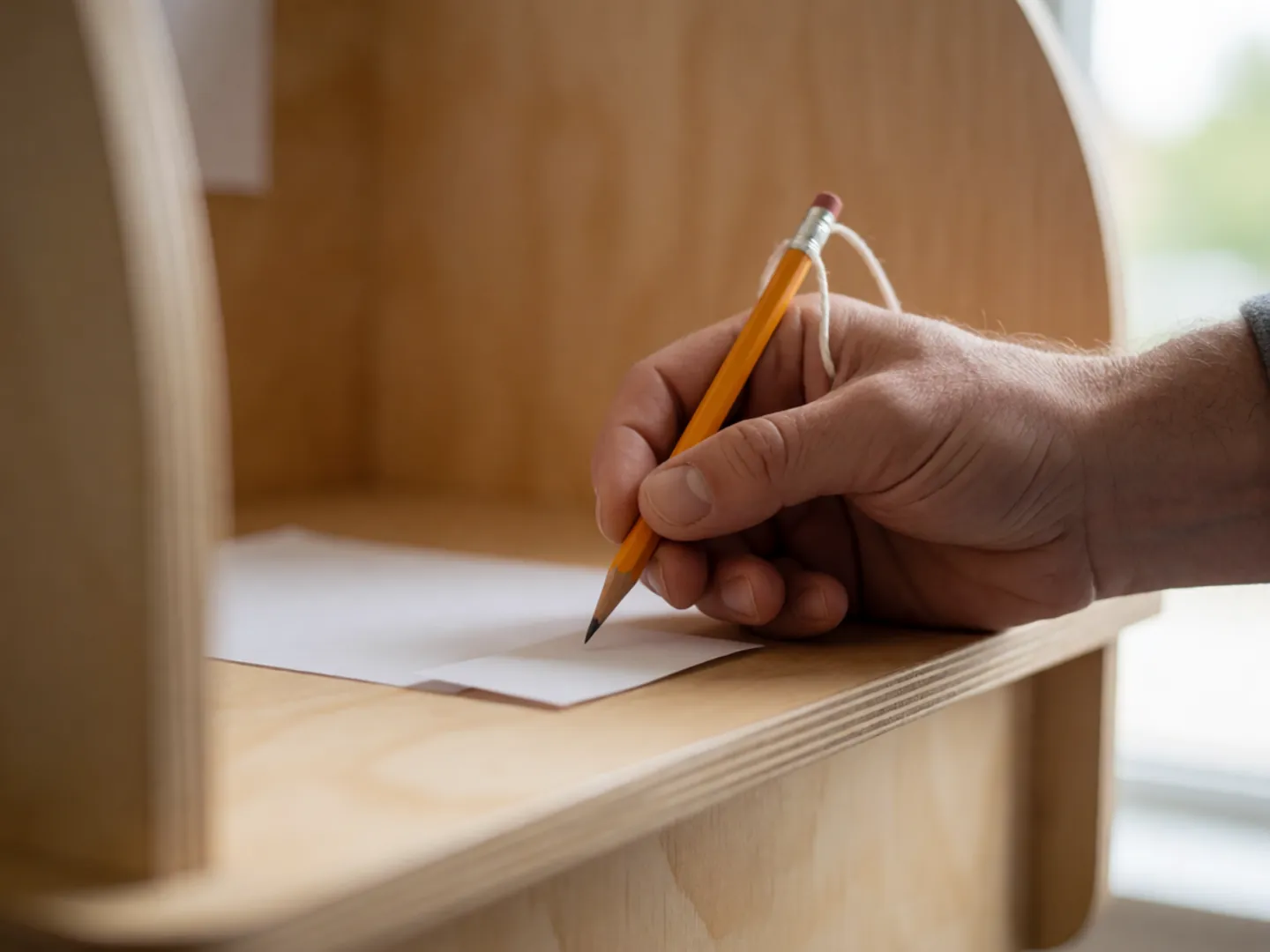
WHY A PENCIL?
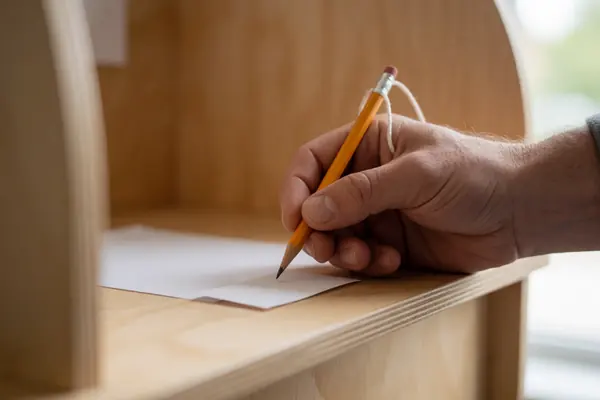
The 1872 Act told voters to mark their paper with the pencil provided. History Today explains why: wet ink could mark another part of the ballot when it was folded, a common problem in the days of inkwells.
The Act also changed nominations. Before 1872 anyone could nominate a candidate, with or without their consent; afterwards nominations had to be made in writing. Bribery did not vanish overnight, and the Corrupt and Illegal Practices Act 1883 went further, limiting election spending.
Questions
The Ballot Act 1872 received royal assent in July 1872. The first parliamentary by-election held by secret ballot took place at Pontefract in August 1872.
Openly. Voters stated their name, address and choice to a clerk in front of the candidates' agents, and choices were often published afterwards in unofficial poll books.
No. History Today says secret voting was first introduced in the Australian state of Victoria in 1856, followed by a range of European countries and US states.
UK law sets a duty of secrecy. Section 66 of the Representation of the People Act 1983 makes it an offence to obtain or pass on how someone in a polling station voted, or the number or mark on the back of their ballot paper.
No. GOV.UK says you can still vote if you have lost your poll card and you do not have to take it with you, though in some elections you need photo ID.
Sources
ABOUT THIS NAME
pollwhowon.com is part of the DoodleSale portfolio. It isn't in an auction right now, but you can ask about leasing it.